
Water Pooling on a Flat Roof: When Is It a Problem?
Learn why outlets, falls and edge details matter, and when standing water may need professional attention.
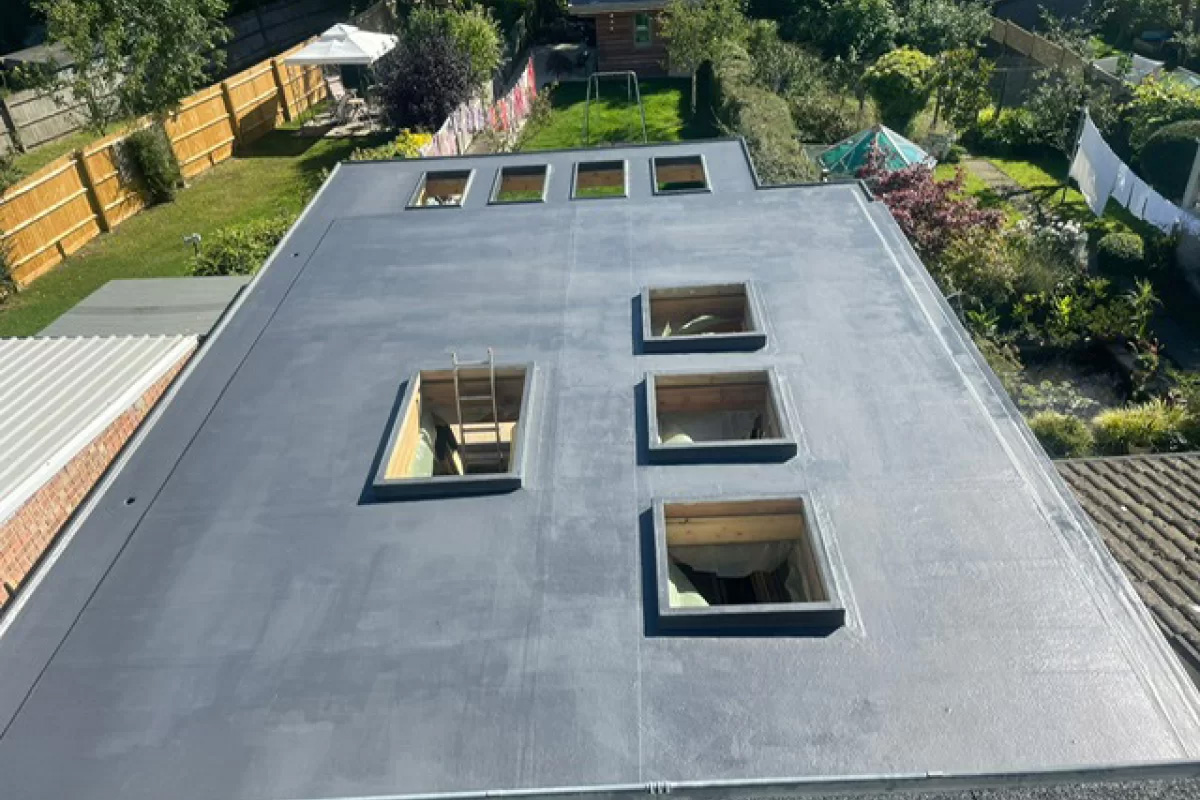
Flat roofs are designed with details that guide rainwater towards an outlet or edge. Seeing a small amount of water after rainfall does not by itself confirm that a roof has failed, but persistent pooling, blocked outlets or signs of water getting indoors are worth investigating.
How water should leave the roof
The roof covering, its fall, outlets and perimeter details work together to manage rainwater. Leaves and other debris can obstruct drainage, while damaged seams, upstands or outlets may allow water to reach the structure below.
What you can check from the ground
Look for visible overflow, a downpipe that appears disconnected, or new damp patches inside. Only clear accessible ground-level gutters if you can do so safely. Never step onto a flat roof to inspect or clear it.
- Notice whether water remains long after nearby rain has stopped.
- Check for visible debris around ground-level outlets.
- Watch for internal staining, bubbling finishes or a musty smell.
- Arrange professional help if drainage remains poor or a leak develops.
Before arranging repairs
A proper assessment should consider the existing covering and details as well as the route rainwater takes. Ask the roofer to explain whether a repair, maintenance or renewal is appropriate and what is included in the proposed work.
Does pooling mean the flat roof needs replacing?
Not necessarily. An obstructed outlet, the roof falls, a local defect or a wider problem with the covering may need different solutions. There is no single safe time limit for every roof system: the covering, design and manufacturer guidance matter. Persistent water or an indoor leak warrants professional assessment rather than applying a generic coating or puncturing the surface to drain it.
What should I include in a flat-roof repair enquiry?
Describe whether the roof covers a garage, extension or occupied room, the covering if known and when you first noticed standing water or internal damp. Include safe photos and the postcode. Ask whether the quote addresses drainage as well as damaged covering, and whether insulation or the deck needs further investigation.